

Prepare
Identify anemia and iron deficiency, assess bleeding risk, review medications, and plan the procedure.

In the perioperative period, PBM connects preparation, bleeding prevention, hemostasis, and transfusion decision-making across the entire surgical journey.
Bleeding risk is particularly relevant in major surgery, but PBM principles must be adapted to the procedure, patient profile, urgency, and available resources.
Editorial basis: Educational content based on Chapters 3 through 6 and Chapter 9 of PBM Essencial. This page is educational and does not replace individualized clinical assessment, institutional protocols, professional guidelines, or applicable regulatory standards.
Perioperative PBM works best when the Three Pillars are planned as a single care pathway rather than as isolated interventions.
Identify anemia and iron deficiency, assess bleeding risk, review medications, and plan the procedure.
Minimize blood loss, maintain physiologic conditions, support hemostasis, and use conservation strategies when indicated.
Avoid iatrogenic blood loss, address persistent causes, and individualize transfusion decision-making based on the clinical picture.
A visual summary designed to support quick understanding and connect the concept with the page content.
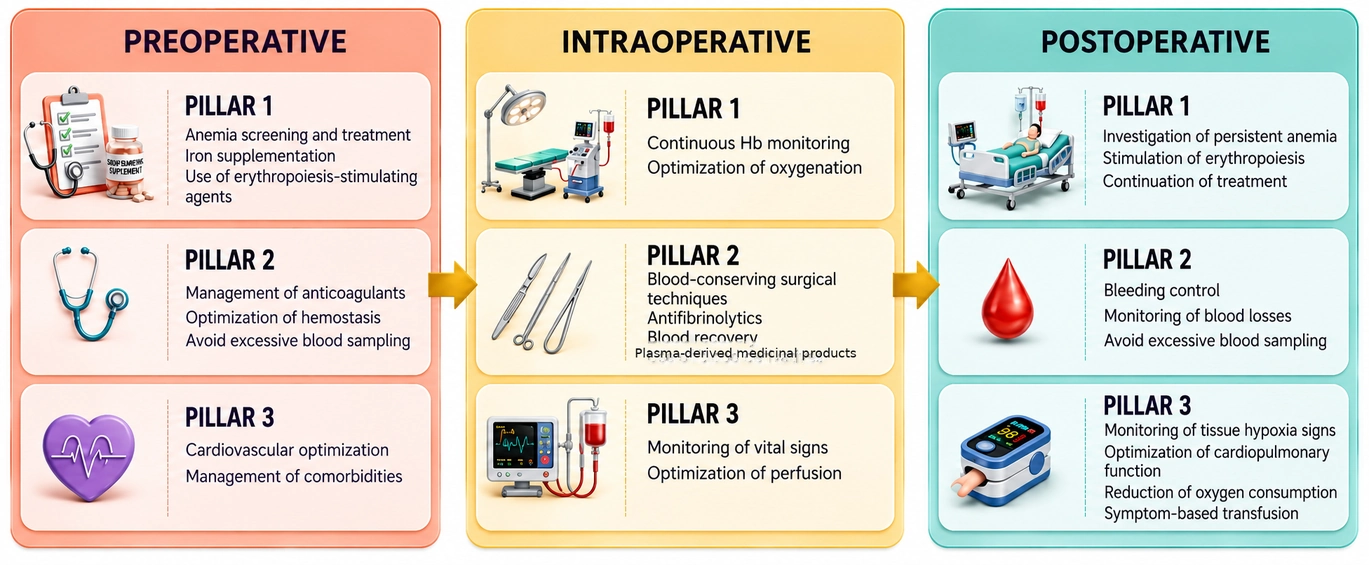
Cardiac surgery, major joint arthroplasty, high-risk obstetrics, and complex cancer surgery present different challenges but share risks of anemia, bleeding, and transfusion exposure.
Implementation must consider technique, urgency, comorbidities, bleeding risk, and resource availability. Protocols from one specialty should not be transferred automatically to another.
PBM is adaptive. The Three-Pillar framework is shared; how it is applied must be specific to the patient and the procedure.
Preparing the patient before surgery, reducing blood loss during the procedure, and avoiding automatic postoperative transfusion are parts of the same strategy. Potential benefit comes from integration and consistency of care.
Details on tranexamic acid, intraoperative cell salvage, transfusion thresholds, anticoagulation management, and the particularities of cardiac, orthopedic, obstetric, and cancer surgery require specific in-depth guidance.
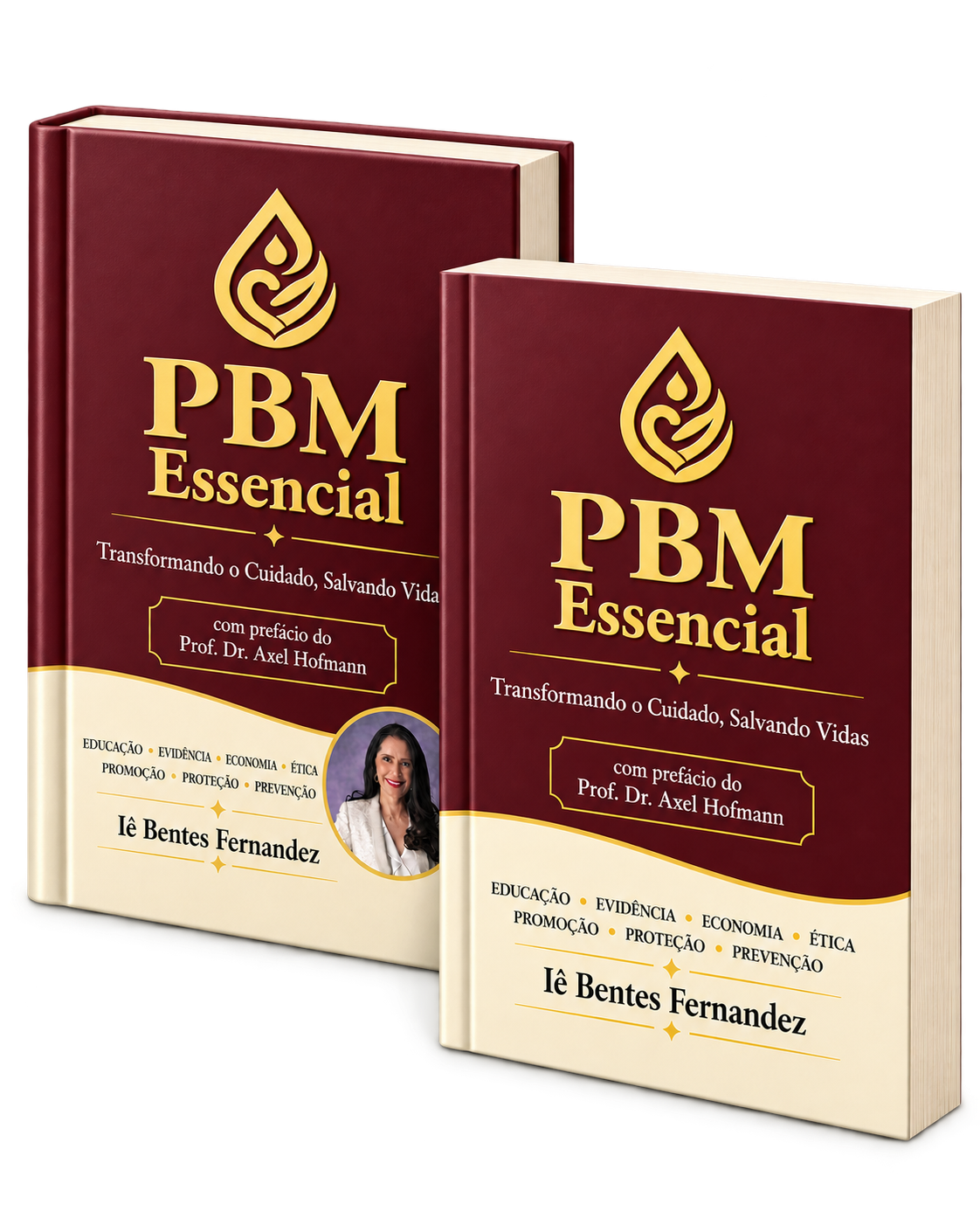
PBM Essencial: Transformando o Cuidado, Salvando Vidas explores the integrated application of PBM across different perioperative phases and in major surgery in greater depth, with references, clinical reasoning, and dedicated educational resources, particularly in Chapters 3 through 6 and Chapter 9.
PBM Essencial explores the topic in depth with protocols, algorithms, tables, references, and resources for study and consultation.
Hardcover and paperback physical editions are currently available in Portuguese.