


From Transfusion Medicine to Patient Blood Management
The history of PBM is a story of discoveries, crises, and paradigm shifts in medicine’s relationship with blood.
From the earliest human transfusions to the consolidation of evidence-based strategies, each advance improved safety and reinforced the understanding that transfusion is a therapeutic intervention that requires careful indication.
Editorial basis: Educational content based primarily on Chapter 2 of PBM Essencial. This page is educational and does not replace individualized clinical assessment, institutional protocols, professional guidelines, or applicable regulatory standards.
From blood as a product to blood as part of the patient
The evolution of transfusion medicine improved safety and saved countless lives. PBM does not deny that history; it represents the next stage, in which transfusion is integrated into a broader strategy to preserve Blood Health.
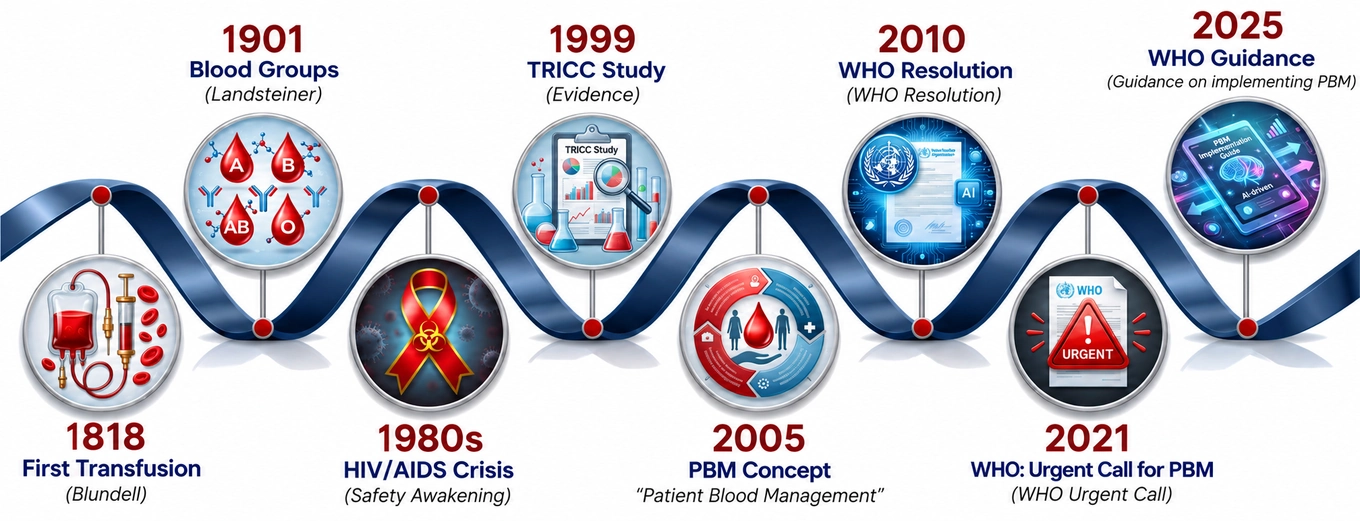
James Blundell publishes experiences with human transfusion prompted by obstetric hemorrhage.
Karl Landsteiner describes blood groups, establishing a foundation for transfusion compatibility.
Anticoagulation, preservation, and storage make organized blood supplies possible.
The expansion of blood banks consolidates transfusion as a therapeutic tool while increasing the need for appropriate-use criteria.
The HIV/AIDS epidemic reshapes the perception of risk and accelerates advances in transfusion safety and hemovigilance.
The TRICC trial becomes a landmark in the modern discussion of restrictive transfusion strategies in critically ill patients.
PBM becomes established as a systematic, multidisciplinary, patient-centered approach supported by international organizations and guidelines.
The World Health Organization publishes specific guidance on PBM implementation with a focus on global Blood Health.
Historical journey from transfusion medicine to Patient Blood Management
A visual summary designed to support quick understanding and connect the concept with the page content.
Transfusion safety and appropriate use of blood
Health crises such as HIV/AIDS demonstrated that transfusion carries real risks and requires traceability, scientific rigor, and appropriate indication. Later, clinical trials and PBM programs broadened the discussion: safety depends not only on making blood components safer, but also on deciding when transfusion is truly needed.
PBM emerges from this evolution: preserve the patient’s own blood, reduce avoidable blood loss, and use transfusion judiciously when its benefits outweigh its risks.
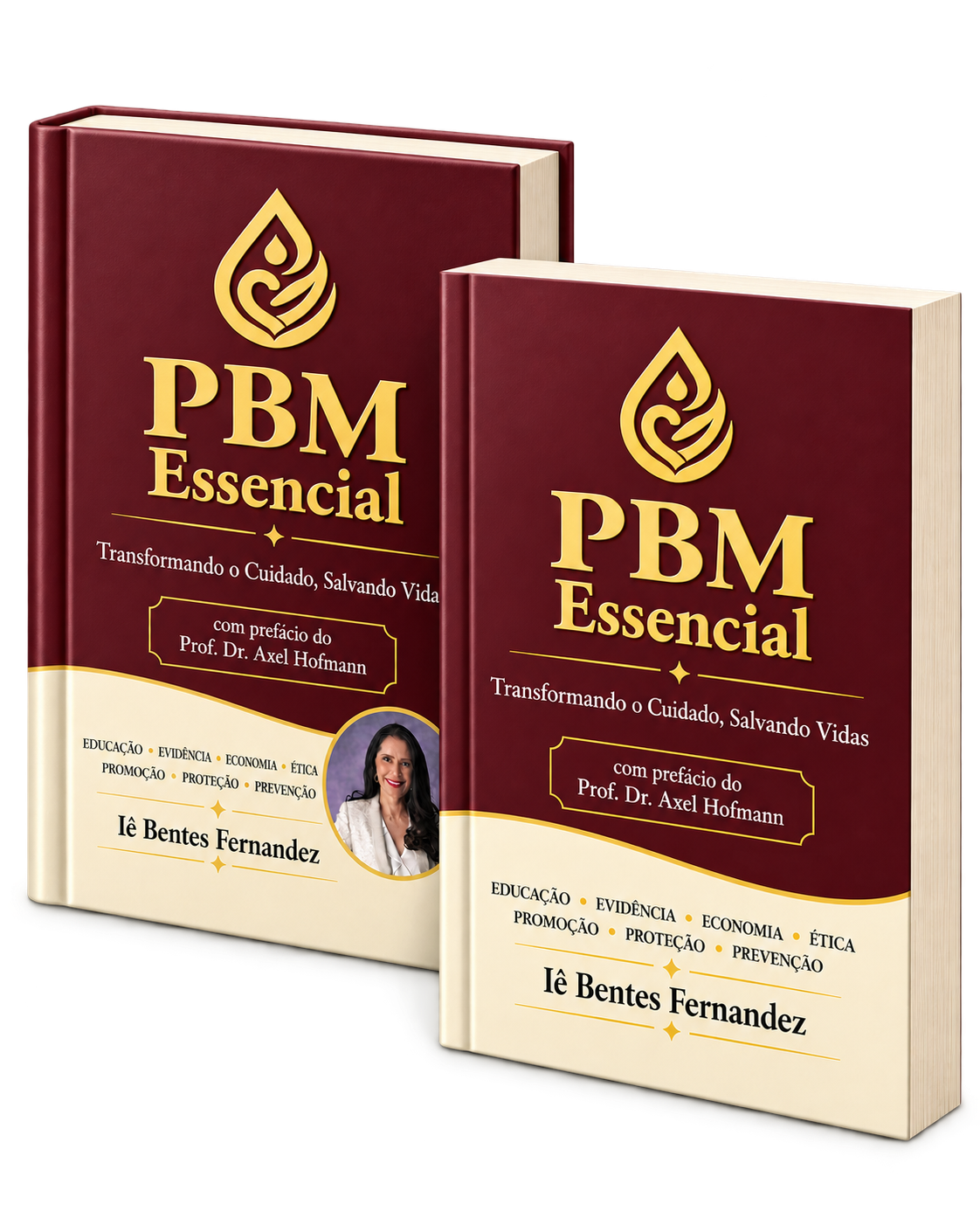
The website introduces the concept. The book explores its application in depth.
PBM Essencial: Transformando o Cuidado, Salvando Vidas explores in greater depth the historical path from transfusion medicine to PBM and its implications for modern practice, with references, clinical reasoning, and dedicated educational resources, particularly in Chapter 2.
PBM Essencial explores the topic in depth with protocols, algorithms, tables, references, and resources for study and consultation.
Hardcover and paperback physical editions are currently available in Portuguese.