


Evidence, Guidelines, and Challenges in Patient Blood Management
PBM is supported by evidence accumulated over decades, but the strength and applicability of that evidence vary across clinical settings.
Truly evidence-based practice requires recognizing both well-established findings and areas of uncertainty. PBM continues to evolve with new studies, new technologies, and ongoing guideline updates.
Editorial basis: Educational content based primarily on Chapters 2 and 10 of PBM Essencial. This page is educational and does not replace individualized clinical assessment, institutional protocols, professional guidelines, or applicable regulatory standards.
An evidence base built over decades
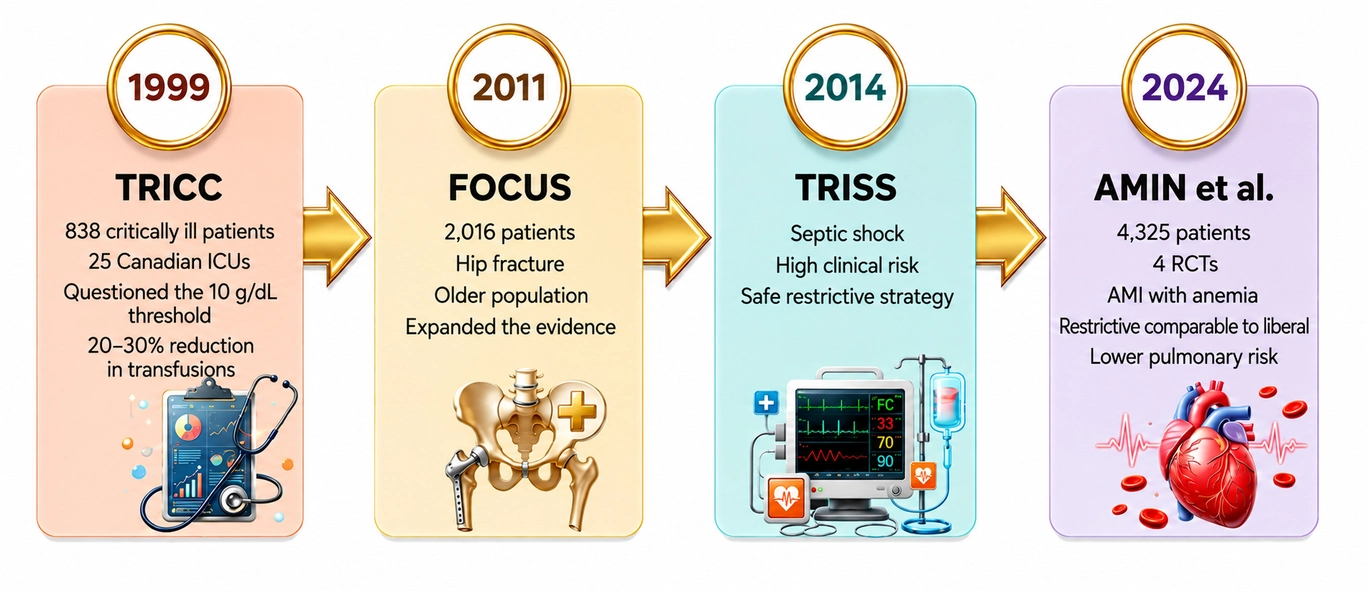
The evolution of PBM brings together studies of transfusion strategies, anemia treatment, hemostasis, blood conservation, and multimodal programs. Trials such as TRICC and FOCUS helped reshape the discussion around transfusion thresholds, while implementation studies and programs evaluated clinical and economic effects of integrated approaches.
How evidence in PBM has evolved
A visual summary designed to support quick understanding and connect the concept with the page content.
Guidelines and international organizations
The World Health Organization has reinforced PBM implementation and in 2025 published specific guidance aimed at improving Blood Health globally. AABB maintains transfusion recommendations and standards for PBM programs, while other national and international societies contribute condition- and setting-specific guidance.
Guidelines inform practice, but they do not eliminate context. Population, procedure, resources, and patient characteristics influence how recommendations are applied.
What is well established and what continues to evolve
There is strong support for avoiding unnecessary transfusions and for using restrictive transfusion strategies in several stable patient populations. At the same time, settings such as certain cardiovascular conditions, acute brain injury, and other specific situations still require individualized assessment and ongoing research.
Limitations are also part of science
PBM should not be presented as a package expected to produce the same result in every hospital and every patient. Studies vary in design, intervention components, and context. Recognizing heterogeneity and uncertainty strengthens, rather than weakens, evidence-based practice.
From evidence to implementation
The World Health Organization supports phased implementation that can be adapted to different settings. This is particularly important in resource-limited systems: the absence of advanced technologies does not prevent high-value actions such as identifying anemia, reducing iatrogenic blood loss, improving transfusion decision-making, and educating teams.
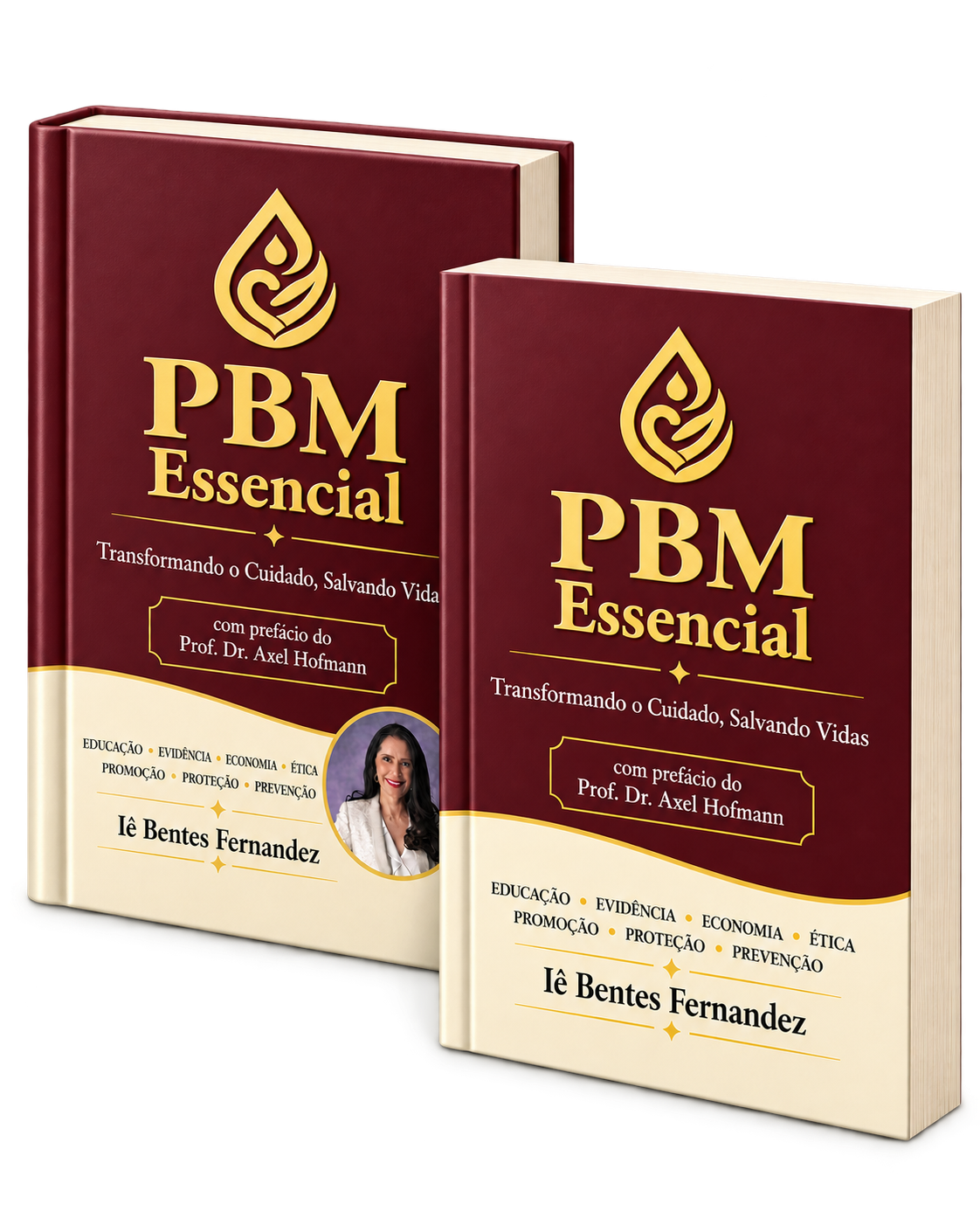
The website introduces the concept. The book explores its application in depth.
PBM Essencial: Transformando o Cuidado, Salvando Vidas explores PBM evidence, guidelines, limitations, and controversies in greater depth, with references, clinical reasoning, and dedicated educational resources, especially in Chapters 2 and 10.
PBM Essencial explores the topic in depth with protocols, algorithms, tables, references, and resources for study and consultation.
Hardcover and paperback physical editions are currently available in Portuguese.