


Hemostasis and Minimization of Blood Loss in PBM
Preserving the patient’s blood requires anticipating bleeding risk, reducing avoidable blood loss, and addressing hemostatic abnormalities in a targeted manner.
The second PBM pillar integrates clinical assessment, perioperative planning, surgical and anesthetic techniques, pharmacologic strategies, and monitoring technologies when appropriate to the clinical setting.
Editorial basis: Educational content based primarily on Chapters 4 and 5 of PBM Essencial. This page is educational and does not replace individualized clinical assessment, institutional protocols, professional guidelines, or applicable regulatory standards.
Blood preservation begins before bleeding occurs
The second PBM pillar brings together strategies to reduce avoidable blood loss and maintain hemostasis. This begins with identifying bleeding risk, reviewing medications, planning the procedure, and preparing the team to respond promptly when bleeding occurs.
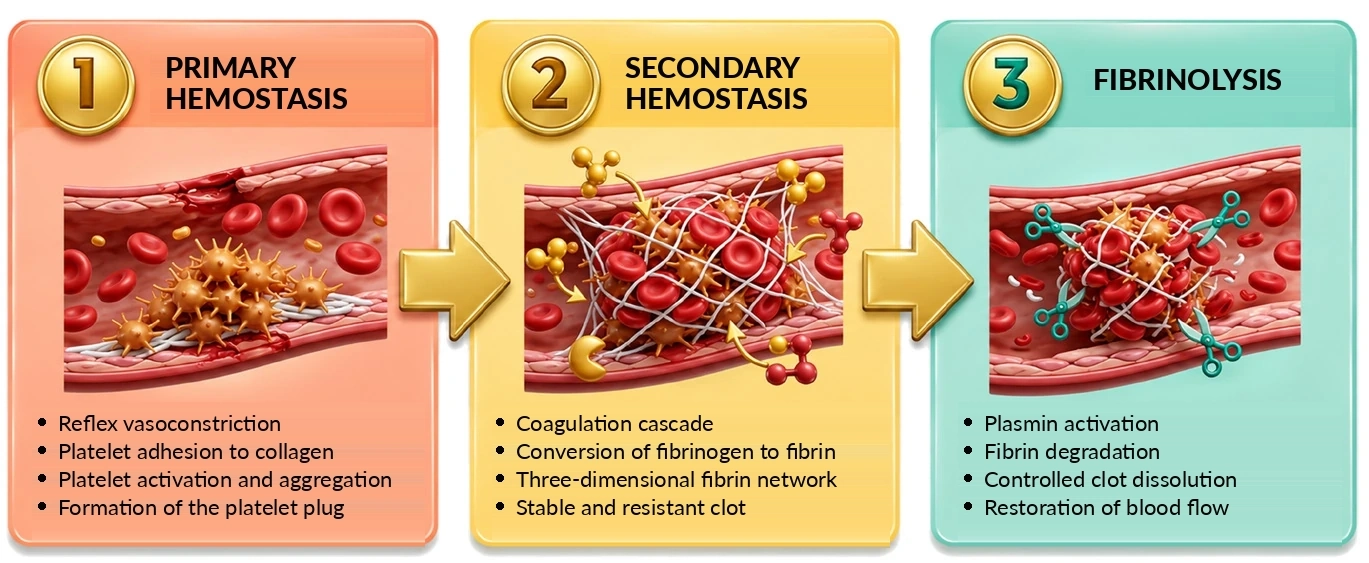
Hemostasis as an integrated process
A visual summary designed to support quick understanding and connect the concept with the page content.
Clinical and laboratory assessment of hemostasis
Bleeding history, antithrombotic use, comorbidities, and procedure characteristics guide the assessment. Conventional coagulation tests may be useful in specific settings, but they do not capture the full dynamics of coagulation on their own.
PBM is not about ordering more tests. It is about using clinical and laboratory information in a targeted way to reduce bleeding, address identifiable causes, and avoid unnecessary empiric interventions.
TEG and ROTEM: real-time viscoelastic information
Viscoelastic testing, such as TEG and ROTEM, assesses clot formation and stability and may support targeted hemostatic therapy in settings of significant bleeding, particularly when integrated into protocols and used by trained teams.
Their value depends on clinical context, availability, appropriate interpretation, and integration with the overall clinical picture. They do not replace clinical judgment and should not be treated as a stand-alone solution.
Minimization of blood loss
Meticulous surgical technique, anesthetic strategies, maintenance of appropriate physiologic conditions, judicious use of antifibrinolytics, and intraoperative cell salvage may be part of PBM in selected patients. The appropriate combination varies according to the procedure, risk, and available resources.
From bleeding to targeted treatment
When hemorrhage occurs, the goal is to identify the cause promptly and correct relevant hemostatic abnormalities without automatically resorting to empiric transfusion of multiple blood components. Well-designed institutional protocols can speed decision-making and reduce variability.
Algorithms, dosing, and detailed management of anticoagulants and antiplatelet agents require deeper evaluation, clinical judgment, and consultation of specific guidelines.
The website introduces the concept. The book explores its application in depth.
PBM Essencial: Transformando o Cuidado, Salvando Vidas explores hemostatic assessment and strategies to minimize blood loss in greater depth, with references, clinical reasoning, and dedicated educational resources, especially in Chapters 4 and 5.
PBM Essencial explores the topic in depth with protocols, algorithms, tables, references, and resources for study and consultation.
Hardcover and paperback physical editions are currently available in Portuguese.