

Optimize red blood cell mass
Identify anemia and treatable causes before transfusion becomes an automatic response.
Explore anemia →
From concept to care centered on Blood Health.
Understand PBM, its Three Pillars, and how Education, Blood Health, prevention of blood loss, and transfusion decision-making come together in a systematic, multidisciplinary, evidence-based model.
Patient Blood Management is a systematic, patient-centered, evidence-based approach designed to improve clinical outcomes through the management and preservation of the patient’s own blood.
The focus shifts from the blood product alone to the patient’s Blood Health: recognizing anemia, preventing blood loss, preserving hemostasis, and individualizing transfusion decision-making.
PBM is neither a single protocol nor a strategy simply to “transfuse less.” It is a care model that organizes decisions throughout the patient journey.
Contemporary care must address anemia, bleeding, variability in transfusion practices, and the limitations of a finite biological resource at the same time. PBM organizes these needs around the patient before transfusion becomes the only response considered.
The goal is to anticipate risk, treat modifiable causes, reduce avoidable blood loss, and make decisions more individualized.
A hierarchical representation of PBM: the overarching concept at the top, Education in a central transformative role, the three clinical pillars, and foundational principles that support care.
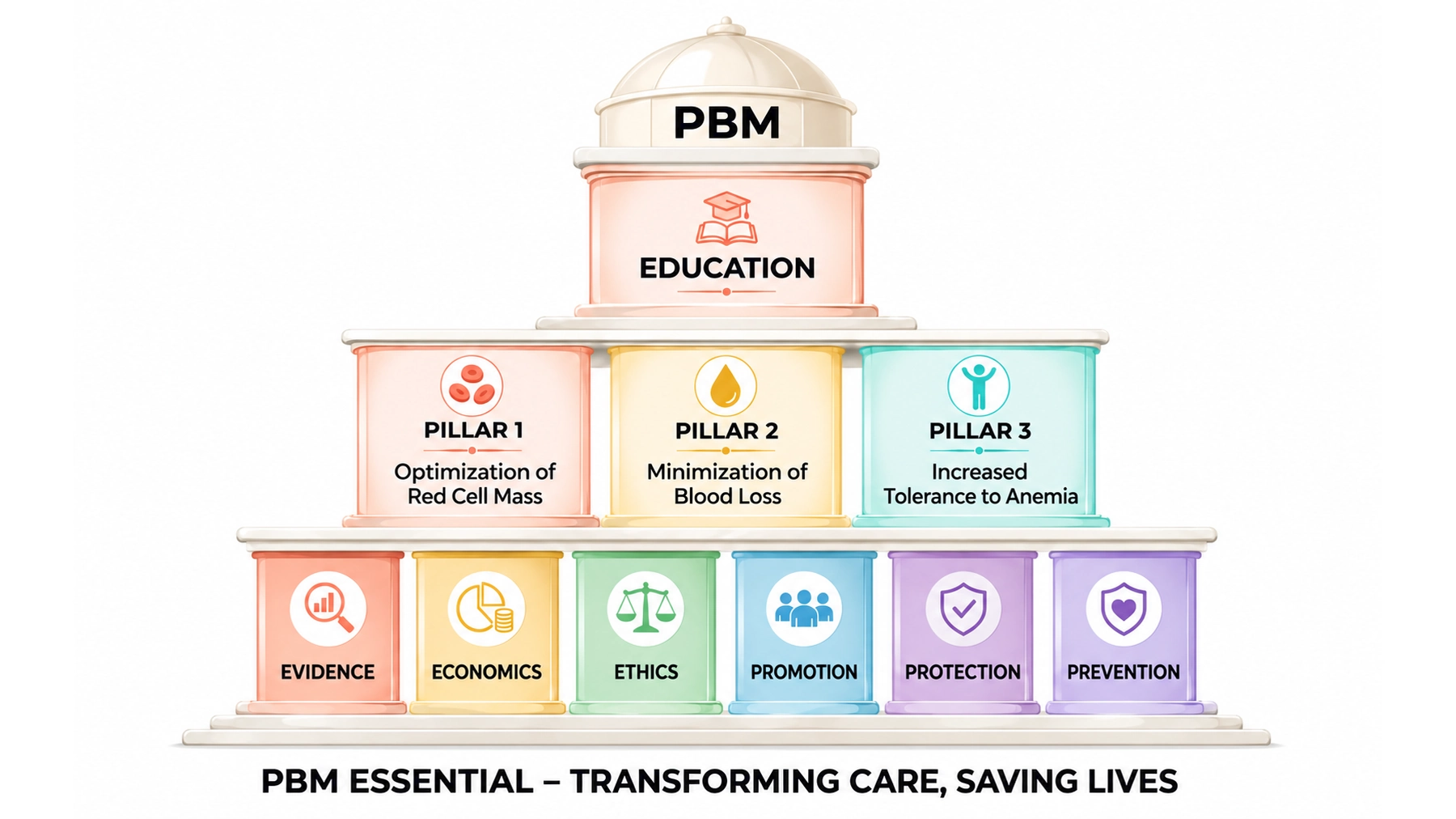
PBM implementation does not depend on protocols alone. It requires continuing education, multidisciplinary alignment, leadership engagement, and sustained attention to patient care.
By strengthening understanding of anemia, blood loss, hemostasis, and transfusion decision-making, Education supports changes that extend beyond individual actions and reach the institution’s culture of care.
The Three Pillars describe the major clinical dimensions of care. Education helps translate these principles into shared knowledge, adherence, consistent practice, and sustainable cultural change.
The Three Pillars organize the main clinical dimensions of PBM and work in an integrated, individualized way.
Identify anemia and treatable causes before transfusion becomes an automatic response.
Explore anemia →Prevent bleeding, preserve hemostasis, and reduce avoidable blood loss throughout care.
Explore hemostasis →Individualize transfusion decision-making based on clinical status, physiology, and evidence.
Explore transfusion decision-making →Transfusion can be beneficial and potentially life-saving when appropriately indicated. PBM changes the logic: it addresses modifiable factors, reduces avoidable blood loss, and evaluates the need for transfusion in clinical context.
The goal is not “zero transfusion.” It is to ensure that each patient receives the most appropriate treatment, with transfusion used when its benefits outweigh its risks.
“PBM is not simply about transfusing less. It is about caring for the patient better.”
Educational summary · Blood ManagerThe Three Ps express the care goals of PBM: Promotion of the best possible hematologic condition, Protection of the patient’s own blood, and Prevention of situations that increase vulnerability, bleeding, or unnecessary transfusion exposure.
This framework is connected to the Three Es: Evidence, Economics, and Ethics, integrating science, sustainability, and patient-centered decision-making.
This page provides the overview. In-depth topics are organized into separate pages to support clear, progressive reading.
How discoveries and crises transformed transfusion medicine and led to PBM.
Open contentExploreOptimization of red blood cell mass and the role of anemia as a modifiable risk factor.
Open contentExploreBleeding prevention, viscoelastic testing, and minimization of blood loss.
Open contentExploreWhy transfusion requires clinical context, not just a hemoglobin value.
Open contentExploreIntegration of the Three Pillars before, during, and after surgery.
Open contentExploreLeadership, teams, processes, indicators, and institutional sustainability.
Open contentExploreGuidelines, studies, limitations, and areas that continue to evolve.
Open contentExploreTechnology, AI, personalization, and new perspectives for Blood Health.
Open content
Hematologist and transfusion medicine specialist, author of PBM Essencial, with experience in clinical care, transfusion service management, education, and Patient Blood Management implementation.
Read the author’s full profileFor readers who want a concise answer before exploring the topics in greater depth.
PBM stands for Patient Blood Management, a systematic, patient-centered, evidence-based approach to preserve Blood Health and improve clinical outcomes.
Optimization of red blood cell mass, minimization of blood loss, and increased tolerance of anemia. They are interdependent and should be applied in an integrated manner.
Education is a central driver for translating PBM principles into practice. It supports multidisciplinary engagement, adherence, implementation, and sustainable change in the culture of care.
No. Transfusion remains an important therapy when indicated. PBM seeks to prevent automatic decisions and individualize care based on clinical context and evidence.
No. The perioperative setting is important, but PBM principles can also be applied in other clinical settings according to patient needs and the available evidence.
Anemia is a potentially modifiable risk factor and is part of the first PBM pillar. The approach seeks to identify its cause and optimize red blood cell mass when appropriate. Learn more about anemia →
Through prevention, planning, blood-conserving techniques, hemostatic assessment, and strategies adapted to the clinical context. Learn more about hemostasis →
The decision is individualized and should not rely exclusively on an isolated hemoglobin value. Symptoms, physiology, clinical context, and evidence must be considered. Learn more →
PBM is multidisciplinary. Physicians from different specialties, nursing, pharmacy, biomedical and laboratory professionals, transfusion medicine, quality, management, and other areas can contribute according to the institution’s structure.
Implementation involves leadership, assessment of local needs, education, protocols, indicators, multidisciplinary integration, and continuous improvement. Explore the fundamentals of implementation →
Structured PBM programs have been associated with more appropriate blood utilization, fewer unnecessary transfusions, and clinical and economic benefits across different settings, with effect sizes varying by population and strategy.
The PBM Library organizes the site content. For systematic study, tables, algorithms, references, and clinical application, see PBM Essencial: Transformando o Cuidado, Salvando Vidas.
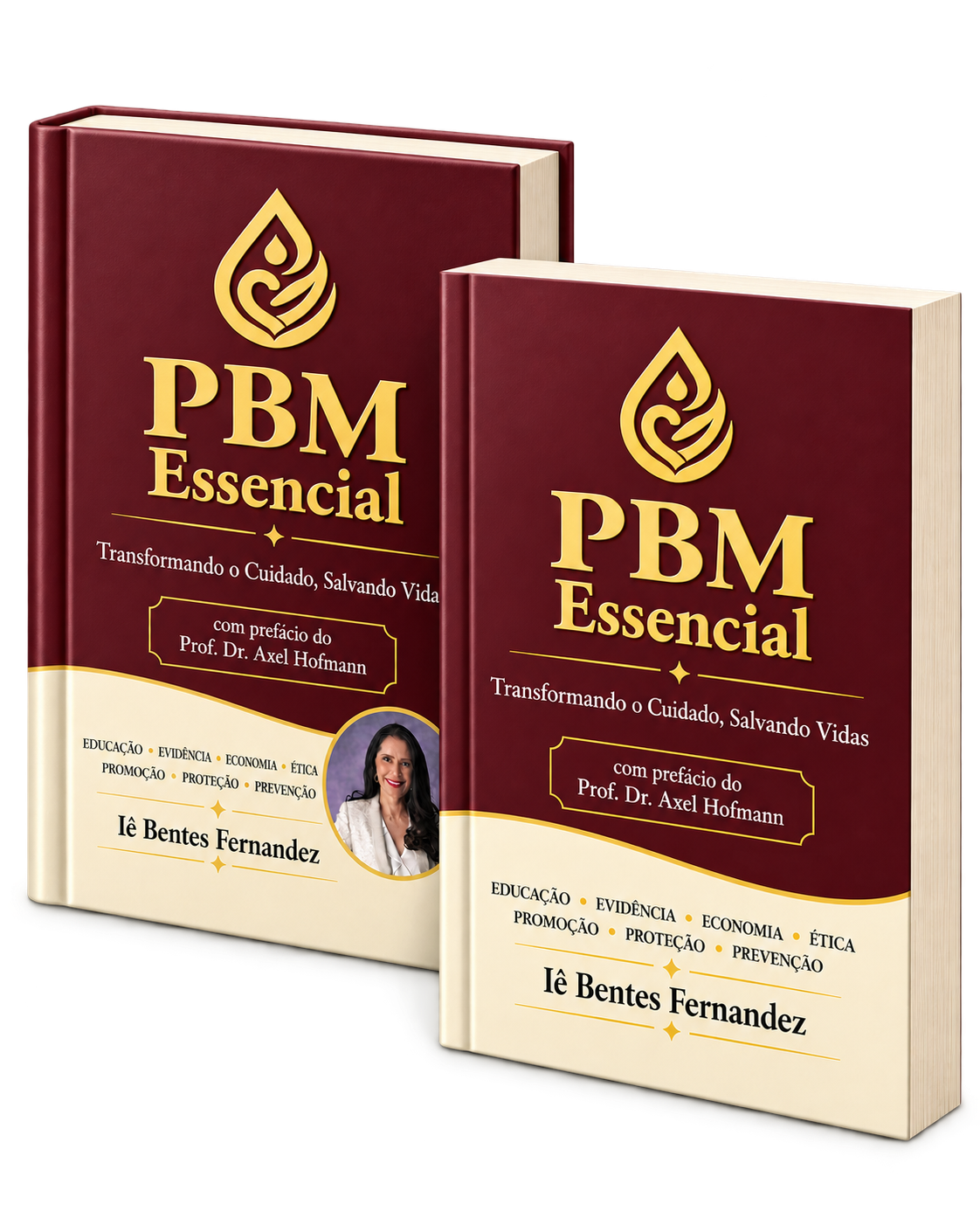
PBM Essencial: Transformando o Cuidado, Salvando Vidas develops the foundations and application of PBM in greater depth, connecting anemia, hemostasis, blood loss, transfusion decision-making, management, implementation, evidence, and future perspectives.
In the book, these concepts are developed through clinical reasoning, tables, algorithms, protocols, references, and resources for study, consultation, and implementation.
Hardcover and paperback physical editions are currently available in Portuguese.