


The Future of Patient Blood Management
Technology, data, and personalization may expand our ability to preserve Blood Health and support more precise clinical decision-making.
The future of PBM does not depend on new technologies alone. It also depends on the ability to incorporate them with evidence, safety, sustainability, and adaptation to different healthcare settings.
Editorial basis: Educational content based primarily on Chapter 11 of PBM Essencial. This page is educational and does not replace individualized clinical assessment, institutional protocols, professional guidelines, or applicable regulatory standards.
Greater precision in monitoring
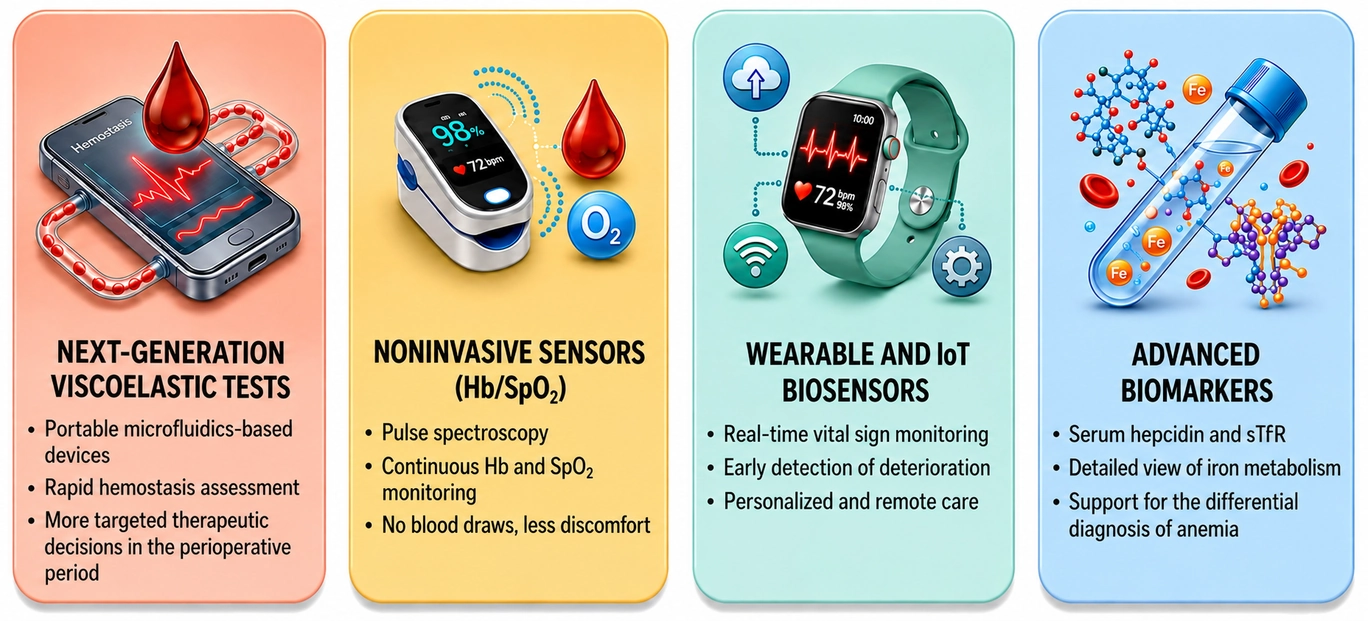
New generations of viscoelastic testing, less invasive hemoglobin monitoring, and biosensors may expand access to real-time information. Their potential is to support earlier, more individualized decisions and reduce reliance on intermittent measurements.
Emerging technologies in PBM
A visual summary designed to support quick understanding and connect the concept with the page content.
Artificial intelligence and data
Artificial intelligence models and analysis of large datasets may help predict the risk of anemia, bleeding, and transfusion, identify practice patterns, and support clinical decision systems. Their real value will depend on clinical validation, data quality, transparency, and safe integration into care workflows.
Technology does not replace the care model. It adds value only when it reinforces evidence-based decisions, safety, and the patient’s actual needs.
Personalized medicine
Advances in pharmacogenomics, new therapies for anemia, and individualized strategies may allow interventions to be selected with greater precision. The trend is to move PBM further away from rigid protocols and closer to decisions calibrated to the patient’s biological and clinical profile.
New therapies and blood substitutes
Research on erythropoiesis-stimulating agents, modulators of hypoxia pathways, and oxygen carriers continues to expand possible options. Many of these technologies still require robust evidence of efficacy and safety before widespread adoption.
The global challenge remains implementation
Even as innovation advances, cultural barriers, infrastructure limitations, resource constraints, and resistance to change remain. The future of PBM therefore depends as much on leadership, education, standardization, measurement, and adaptation to local realities as it does on technology.
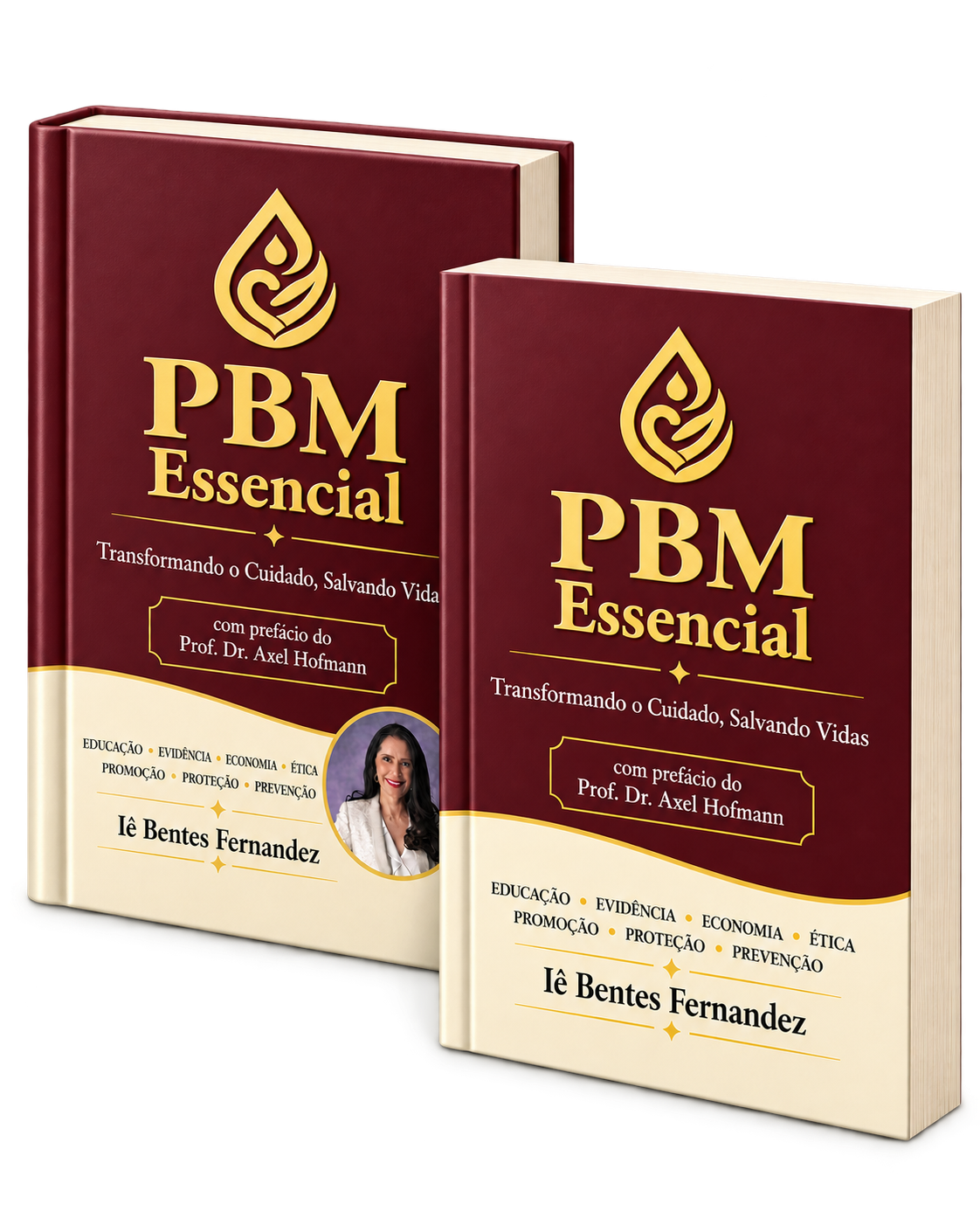
The website introduces the concept. The book explores its application in depth.
PBM Essencial: Transformando o Cuidado, Salvando Vidas explores emerging technologies and new perspectives for PBM in greater depth, with references, clinical reasoning, and dedicated educational resources, especially in Chapter 11.
PBM Essencial explores the topic in depth with protocols, algorithms, tables, references, and resources for study and consultation.
Hardcover and paperback physical editions are currently available in Portuguese.