

Leadership and priority
Connect PBM with institutional strategy, quality, and patient safety.

Sustainable PBM does not emerge from an isolated protocol. It requires leadership, governance, people, processes, education, and continuous measurement.
Implementation must be adapted to the maturity and reality of each institution. The goal is to integrate PBM into routine care and clinical governance, rather than allowing it to remain a parallel initiative or one dependent on only a few professionals.
Editorial basis: Educational content based primarily on Chapters 7 and 8 of PBM Essencial. This page is educational and does not replace individualized clinical assessment, institutional protocols, professional guidelines, or applicable regulatory standards.
Sustainability depends on integrating the program into governance and care processes. When PBM remains confined to an isolated group, it tends to lose momentum as people, leadership, or priorities change.
Connect PBM with institutional strategy, quality, and patient safety.
Define roles and integrate clinical care, transfusion medicine, management, data, and education.
Translate principles into workflows, protocols, indicators, and improvement cycles.
A visual summary designed to support quick understanding and connect the concept with the page content.
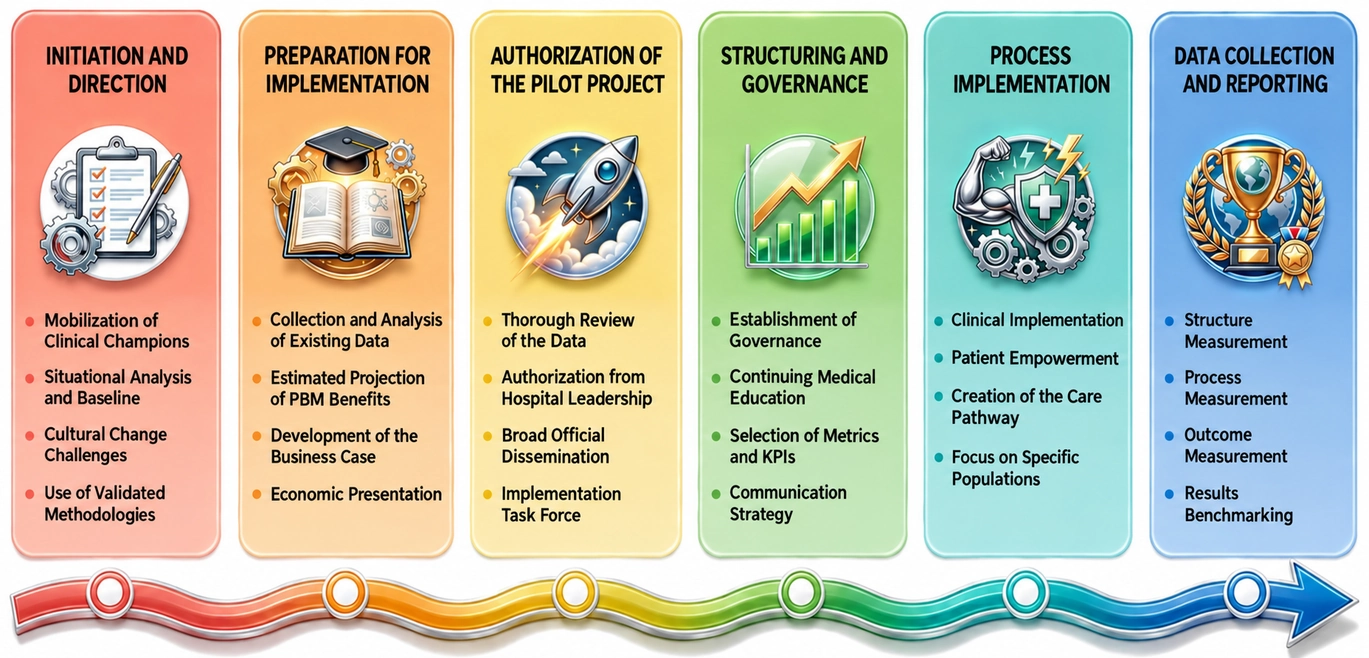
Robust programs combine executive leadership with operational action. Hematology/transfusion medicine, anesthesiology, surgery, nursing, pharmacy, quality, management, and data analysis may take complementary roles according to local structure.
More important than copying an organizational chart is defining who decides, who acts, who should be consulted, and how information flows.
Clinical, operational, and financial indicators help demonstrate value, identify deviations, and guide priorities. Examples may include blood component utilization, anemia screening, adherence to care pathways, and economic impact.
A number only has value when it leads to action. Monitoring, timely feedback, and communication of results form a continuous improvement cycle.
Each institution needs to assess its own setting, prioritize problems, establish governance, and adapt tools. The complete implementation phases, barriers, responsibility matrices, KPIs, and sustainability strategies are developed in greater depth in the book.
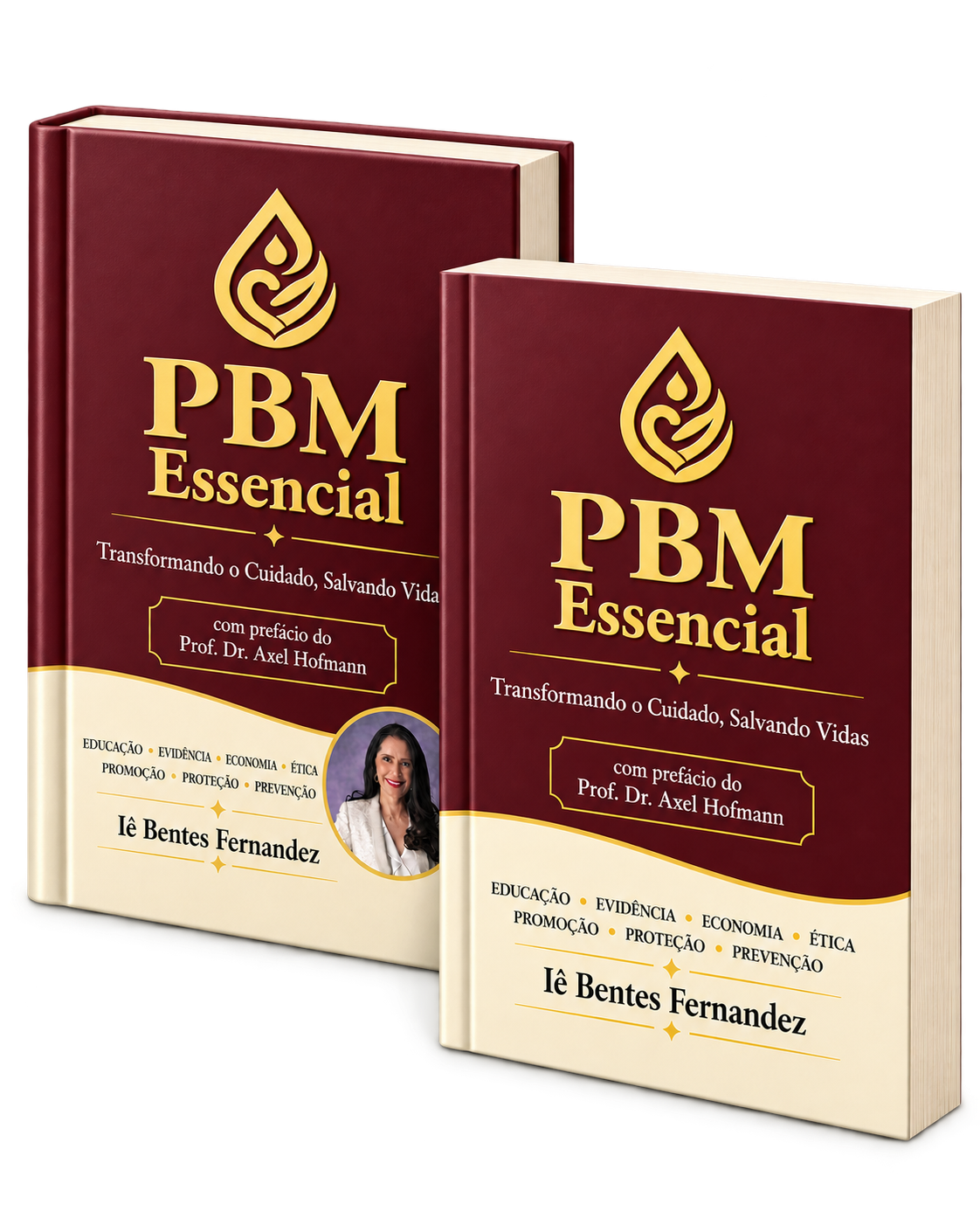
PBM Essencial: Transformando o Cuidado, Salvando Vidas explores the design, implementation, and sustainability of institutional PBM programs in greater depth, with references, clinical reasoning, and dedicated educational resources, especially in Chapters 7 and 8.
PBM Essencial explores the topic in depth with protocols, algorithms, tables, references, and resources for study and consultation.
Hardcover and paperback physical editions are currently available in Portuguese.