


Transfusion Decision-Making in Patient Blood Management
Transfusion is a clinical decision. Hemoglobin provides important information, but it does not replace patient assessment.
The third PBM pillar recognizes the physiologic capacity to adapt to anemia and supports contextualized transfusion decision-making that considers clinical stability, symptoms, perfusion, comorbidities, bleeding, and the available evidence.
Editorial basis: Educational content based primarily on Chapter 6 of PBM Essencial. This page is educational and does not replace individualized clinical assessment, institutional protocols, professional guidelines, or applicable regulatory standards.
Hemoglobin is part of the decision, not the whole decision
In stable patients without signs of decompensation, the hemoglobin value should be interpreted together with symptoms, perfusion, comorbidities, the rate of decline, active bleeding, and the capacity for physiologic compensation.
A transfusion threshold is a clinical reference, not a substitute for clinical judgment.
Tolerance of anemia and individualized decision-making
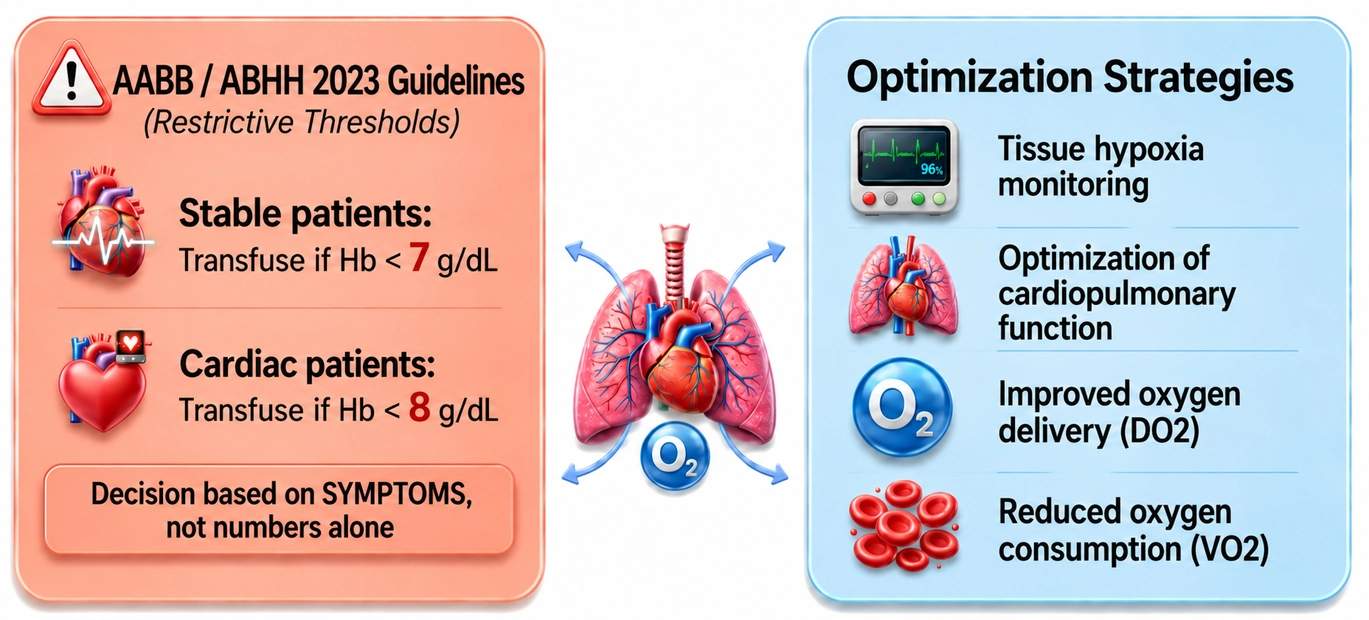
A visual summary designed to support quick understanding and connect the concept with the page content.
Restrictive strategies and the paradigm shift
Major clinical trials and modern guidelines support more restrictive transfusion strategies in many groups of stable patients. This has challenged the assumption that higher hemoglobin levels should automatically be corrected with transfusion.
Applicability varies. In some settings, the evidence is less certain, or clinical instability and bleeding may require a more aggressive response.
Tolerance of anemia
The body has compensatory mechanisms that help maintain oxygen delivery as hemoglobin decreases. The third PBM pillar recognizes this adaptation and seeks to avoid unnecessary transfusion when the patient remains clinically stable.
This does not mean normalizing severe anemia or ignoring signs of hypoxia. It means distinguishing a laboratory value from a true therapeutic need.
When urgency changes the approach
Active bleeding, hemodynamic instability, signs of hypoperfusion or ischemia, and certain critical situations may require faster decisions that differ from stable scenarios. Massive transfusion protocols have specific objectives and should not be confused with a rigidly applied restrictive strategy.
PBM is appropriate decision-making, not “zero transfusion”
Transfusion remains a potentially life-saving intervention when indicated. PBM seeks to ensure that every unit administered is part of a deliberate clinical decision based on benefit-risk assessment and integrated with other treatment options.
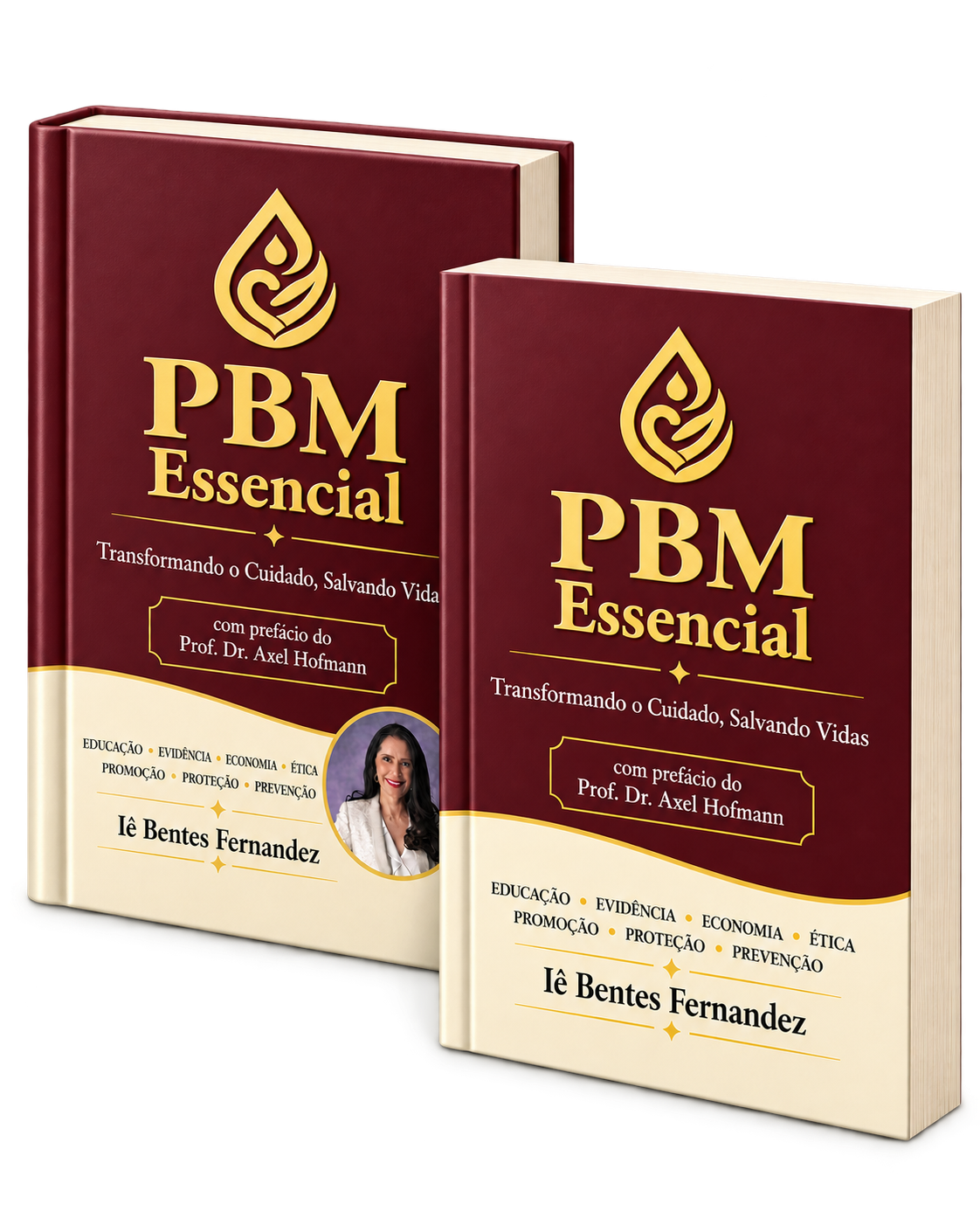
The website introduces the concept. The book explores its application in depth.
PBM Essencial: Transformando o Cuidado, Salvando Vidas explores the physiologic foundations, evidence, and nuances of transfusion decision-making in greater depth, with references, clinical reasoning, and dedicated educational resources, especially in Chapter 6.
PBM Essencial explores the topic in depth with protocols, algorithms, tables, references, and resources for study and consultation.
Hardcover and paperback physical editions are currently available in Portuguese.